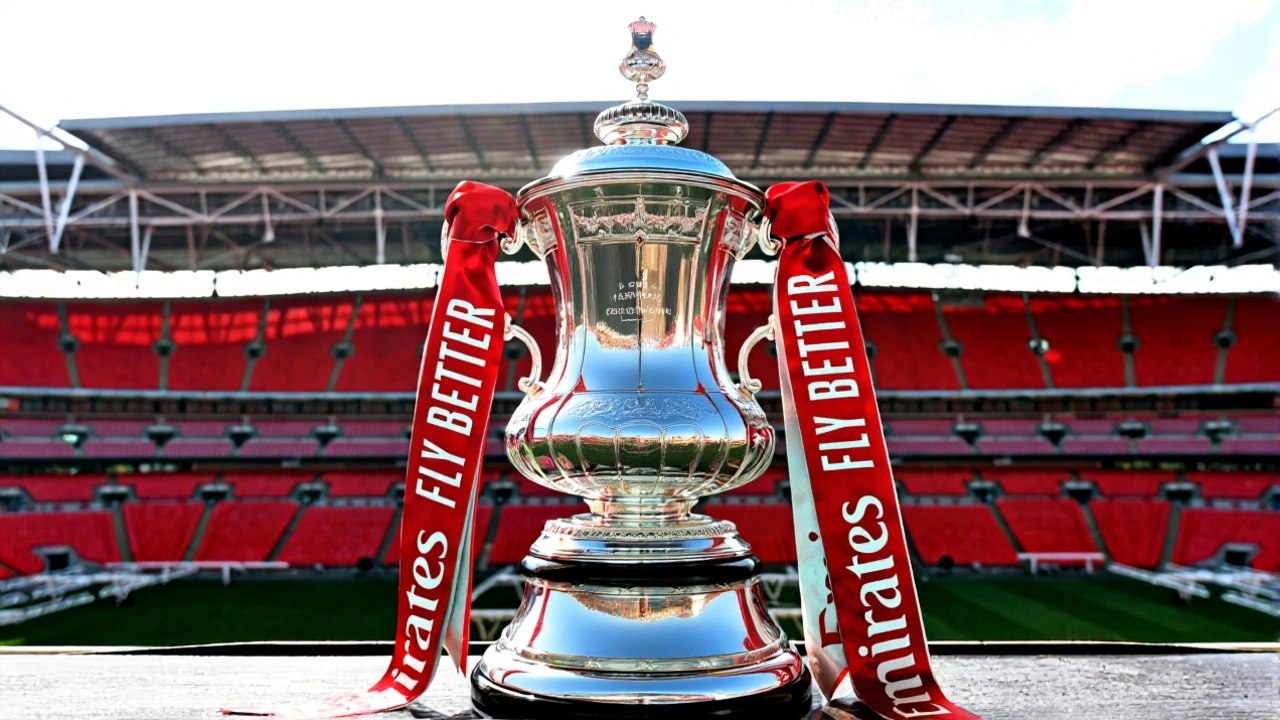
The Emirates FA Cup 2025-26 third round draw was completed on Monday, December 8, 2025, moments before the lower-league clash between Brackley Town and Burton Albion—a quiet prelude to the storm about to hit English football. For the first time this season, the big names arrived. Crystal Palace, the defending champions, joined Manchester United, Liverpool, and Manchester City as Premier League clubs entered the fray. And with them came the weight of history, the roar of expectations, and the promise of upsets.
The Stage Is Set: 64 Teams, One Dream
Forty-four teams advanced from the Second Round Proper, but the real drama began when the 20 Premier League sides and 24 EFL Championship clubs were added to the pot. That’s 64 teams total—half of them from England’s top two divisions. The draw, conducted live at Wembley Stadium’s broadcast studio, didn’t just randomize fixtures; it rewrote narratives. Suddenly, a League Two side that scraped through in the Second Round could find themselves hosting a Premier League giant on January 10. That’s the magic of the FA Cup. No salary cap. No seeding. Just football.
Confirmed fixtures include Preston North End versus Wigan Athletic on Saturday, January 10, and Ipswich Town versus Blackpool on the same day. Kickoff times remain TBC, but expect the big matches to be scheduled for prime-time slots on ESPN and Sky Sports. The Football Association, headquartered at Wembley Stadium in London, oversees every detail—from the draw to the final whistle. Under Chief Executive Mark Bullingham and Chairman Debbie Hewitt MBE, the FA ensures the tournament’s integrity, even as commercial interests grow.
Why This Round Matters More Than Ever
For smaller clubs, the third round is life-changing. A single win can mean over £2 million in prize money and broadcasting revenue. For clubs like Brackley Town, who’ve never reached this stage before, a home tie against a Premier League side could mean a 10,000-seat crowd, a global TV audience, and a payday that funds next season’s youth academy. For the giants? It’s a chance to rest stars—or a trap waiting to spring. Crystal Palace, after their surprise 2025 final win over Manchester City, are no longer underdogs. They’re the target.
Historically, third-round upsets are legendary. In 2021, Shrewsbury Town knocked out Manchester United at Old Trafford. In 2018, Lincoln City became the first non-league team in 103 years to reach the quarter-finals. This year? Don’t be surprised if a team from League One—say, Salford City or Port Vale—pulls off another miracle. The FA Cup doesn’t care about market value. It cares about heart.
The Trophy, The Cash, The Ticket to Europe
Winning the Emirates FA Cup isn’t just about lifting silverware. The winner earns a direct entry into the UEFA Europa League next season. That’s more than prestige—it’s revenue. Clubs outside the Champions League race rely on this path to stay financially competitive. The prize money? Official figures aren’t released yet, but based on 2024-25 payouts, the champion will pocket at least £2.3 million. Runner-up? Around £1.2 million. Even a third-round exit brings a minimum of £110,000. For a club like Wigan Athletic, still recovering from relegation, that’s transformative.
The final, traditionally held on Saturday, May 16, 2026, at Wembley Stadium, will be the culmination of 12 rounds of knockout football. The FA Cup is the oldest national competition in the world—dating back to 1871-72. No other tournament has survived wars, financial collapses, and modernization to remain this emotionally resonant. It’s not just a competition. It’s a cultural institution.
What Comes Next?
The fourth round draw will take place on January 13, 2026, immediately after the final third-round match. That’s when the real gauntlet begins. If Liverpool survives their third-round tie, they’ll face a team that’s already beaten two higher-ranked opponents. The pressure mounts. Media scrutiny intensifies. And for managers like Ruben Amorim at Manchester United or Arne Slot at Liverpool, it’s a chance to prove they can win silverware—even if the league season is slipping away.
For fans? It’s pure football. No VAR debates over offside lines. No corporate sponsorships drowning out chants. Just 90 minutes of chaos, hope, and history.
Frequently Asked Questions
How does the Emirates FA Cup third round draw work?
The draw is completely random, with no seeding. Teams from the Premier League and Championship enter at this stage alongside 44 winners from the Second Round Proper. The Football Association conducts the draw live, ensuring no team faces a local rival unless randomly drawn. All 64 teams are placed into a single pot, and pairings are drawn without regard to league position or geography.
Why do Premier League teams enter at the third round?
The FA Cup’s structure gives lower-league clubs a chance to compete for months before the top teams join. This preserves the underdog narrative and extends the tournament’s emotional arc. Premier League clubs, with packed schedules, enter later to avoid fixture congestion. It also means their participation becomes a major event rather than routine.
What’s at stake for lower-league teams in the third round?
A single win can bring over £2 million in prize money and TV revenue, enough to fund a club’s entire annual budget. Broadcast exposure on ESPN and Sky Sports can attract sponsorships and boost ticket sales. For clubs like Brackley Town, this is a once-in-a-generation financial lifeline—and a chance to play on national television against global stars.
Who holds the record for most FA Cup wins?
Arsenal leads with 14 titles, followed by Manchester United with 12. But since 2000, only three clubs have won it: Arsenal, Chelsea, and Manchester City. Crystal Palace’s 2025 win was their first since 1973, making them the first non-top-six club to lift the trophy in over 50 years.
How can fans watch the Emirates FA Cup in the United States?
All matches are broadcast live on ESPN and its affiliated channels, including ESPN Select and ESPN+. Subscribers can stream every round, from the early qualifiers to the final at Wembley. Commentary is available in English, with additional analysis from former players like Rio Ferdinand and Alan Shearer. No regional blackouts apply in the U.S., making it one of the most accessible international cups for American fans.
What happens if the FA Cup final ends in a draw?
Since 2000, the final has gone straight to extra time and penalties if tied after 90 minutes. Replays were abolished after the 1999-2000 season. The winner qualifies for the UEFA Europa League regardless of league position. If the winner has already qualified for Europe via the Premier League, the Europa League spot goes to the sixth-place finisher in the league.

Sihle Tana
I am a journalist with a passion for covering daily news in Africa. My work has taken me across the continent, reporting on significant events and stories that impact communities. I strive to bring insightful and comprehensive news coverage to my readers.
The FA Cup? More like the FA Corporate Sponsorship Circus. You think Brackley Town gets £2 million? Nah. That money vanishes into the pockets of Sky Sports, the FA’s offshore shell companies, and the Premier League’s private equity overlords. The ‘magic’? It’s a marketing stunt to keep the masses distracted while real football dies in the Championship. Wake up. This isn’t tradition-it’s capitalism with a Union Jack on it.
Man i just watched brackley town vs burton and honestly? The kid who scored the winner had mud on his socks and a smile wider than the pitch. Thats what this cup is for. Not the cash not the tv deals just pure unfiltered joy. The giants can come and go but the heart? Thats still here. Keep it real guys.
yo if ur a small club and u get a home game vs liverpool u better train extra hard. I mean seriously. One win and u can pay ur players for a year. No cap. No salary cap. Just pure football. I love this tournament. Bring on the chaos.
Ah yes, the FA Cup. Where a League Two team from a town smaller than my aunt’s WhatsApp group gets to play against a billionaire-owned club with a stadium that costs more than the GDP of three Indian states. How quaint. And how utterly, beautifully British. The only place on earth where ‘underdog’ is a marketing term and ‘magic’ is just a synonym for ‘financial miracle’.
The FA Cup has always been more than a competition. It is a mirror. It reflects the soul of English football. The quiet hope in a village ground. The roar of a crowd that has never seen such glory. And the quiet dignity of those who play for love, not logos.
Let me tell you something about the FA Cup its not just about the prize money or the Europa League spot or even the historical weight of it all its about the fact that a kid from a council estate in Wigan can be on the same pitch as a guy who gets paid more in a week than his entire village makes in a year and yet they both run the same distance sweat the same sweat and fight for the same dream and that right there is the most beautiful thing about football because no amount of money can buy that kind of equality on the pitch and thats why i will always watch every single round no matter how many times the giants win because the magic is real and its not in the boardroom its in the mud and the rain and the old men in the stands who still remember when their team beat Manchester United in 1987
It is truly remarkable that the Football Association maintains such a prestigious tournament despite the overwhelming commercial pressures of modern football. The integrity of the draw, the absence of seeding, and the inclusion of non-league clubs reflect a commendable commitment to tradition. One must acknowledge the efforts of Mr. Bullingham and Ms. Hewitt in preserving this cultural institution.
It’s fascinating how the FA Cup manages to feel both timeless and tragically out of touch. The ‘magic’ is real-but so is the fact that a £110,000 payout for a third-round exit is still less than a Premier League player earns in a single match. The system is broken, but the emotion? That’s still intact. I just wish the money followed the heart.
Crystal Palace won it last year? LOL. They got lucky. The FA let them win because they needed a ‘feel-good story’ to sell tickets. And now they’re the favorites? Please. The entire tournament is rigged. The draw is scripted. The broadcasters pick the ‘sexy’ matchups. You think Brackley Town has a chance? They’re already being told when to lose. The magic? It’s a scripted Netflix documentary.
Hey Mona, I get where you’re coming from-but I’ve seen small clubs play with so much heart that it gives me chills. Maybe the system’s flawed, but the passion? That’s real. That kid who scored for Brackley? He’s gonna remember this forever. And that’s worth more than any conspiracy theory.
It is unconscionable that the FA allows such a prestigious tournament to be exploited by commercial interests. The notion that a League Two club can ‘win’ £2 million is a cruel illusion-most of that money is absorbed by intermediaries, broadcasters, and tax havens. And yet, the FA continues to promote this as ‘fair play.’ It is a farce. A theatrical deception masquerading as tradition.
Let’s be real-this cup is just a glorified charity event for the English elite. Meanwhile, American soccer fans are building real stadiums, paying real wages, and actually developing talent. Why are we still celebrating a 150-year-old relic that only benefits the same 5 clubs? We don’t need ‘magic.’ We need progress. And if the FA won’t fix it? Let the U.S. buy it and make it worth something.