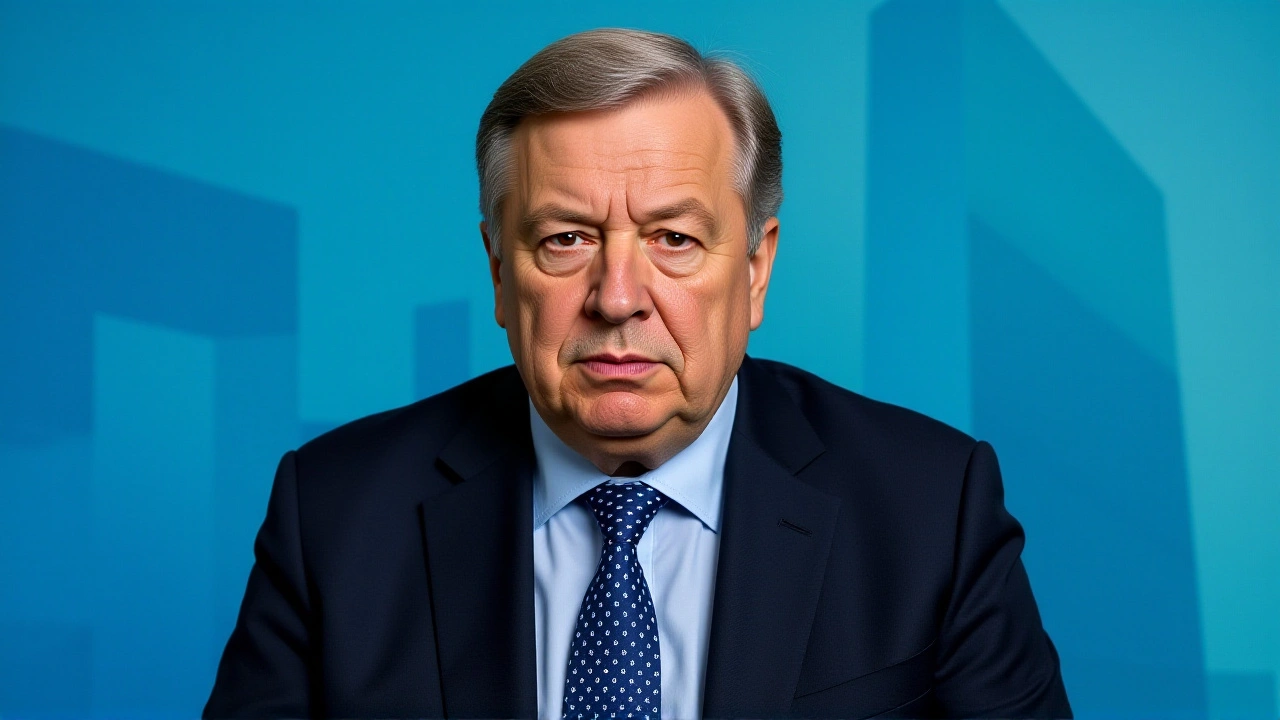
On December 1, 2025, António Manuel de Oliveira Guterres, the ninth United Nations Secretary-General, delivered a powerful appeal to the world: "We have the power to transform lives and futures, and end the AIDS epidemic once and for all." The message, broadcast globally through UN channels from Vienna to Bangkok and Kyiv, wasn’t just ceremonial—it was a direct challenge to governments, donors, and communities still falling short in the fight against HIV. The timing mattered. This was World AIDS Day 2025, the 37th annual observance, and for the first time in over a decade, the world stands at a crossroads: we have the tools to end AIDS, but not the will to distribute them equally.
Global Coordination, Uneven Progress
The United Nations didn’t just release one statement. It orchestrated a symphony of voices. Alongside Guterres, the UNAIDS, the World Health Organization, the United Nations Development Programme, the United Nations Population Fund, and the Government of South Africa all issued statements. This wasn’t coincidence. It was strategy. The message was clear: ending AIDS isn’t a health issue alone—it’s a development, human rights, and economic imperative. And yet, behind the unified front, the data tells a more complicated story.According to the Citizen Portal AI report from the same day, the UN acknowledged "long-term progress on HIV alongside persistent gaps in prevention and treatment access." That truncated phrase is the heart of the crisis. We’ve reduced new infections by 52% since 2010 and AIDS-related deaths by 69% since their 2004 peak. But those numbers hide the fractures. In Eastern Europe and Central Asia, new infections rose 60% between 2010 and 2023. In sub-Saharan Africa, where 67% of all people living with HIV reside, nearly 1 in 4 still don’t know their status. And in the U.S., Black and Latino communities account for more than 70% of new diagnoses despite making up just 30% of the population.
Why This Year Feels Different
This isn’t the first time Guterres has called for an end to AIDS. But something shifted in 2025. For the first time since 2016, global funding for HIV programs plateaued—$20.7 billion in 2024, down from $22.4 billion in 2022. Meanwhile, inflation, donor fatigue, and competing crises have pushed HIV to the back of policy agendas. The United Nations knew this. That’s why the 2025 message avoided numbers and instead leaned on moral urgency. It didn’t say "we must reach 95-95-95 targets by 2030." It said: "We have the power." That’s intentional. It’s a reminder that the tools—antiretroviral therapy, PrEP, needle exchanges, community-led outreach—already exist. What’s missing is equity."The people being left behind aren’t faceless statistics," said Dr. Naledi Pandor, former South African Minister of Health, in a separate interview with The Lancet on December 2. "They’re young women in rural Mozambique who can’t get PrEP because the clinic is 40 kilometers away. They’re gay men in Russia who fear arrest if they seek testing. They’re transgender youth in Brazil whose insurance won’t cover their medication. This isn’t about science anymore. It’s about justice."
The Political Silence
What’s striking about the 2025 campaign is what it didn’t include. No new funding pledges. No deadlines. No country-specific commitments. Even the Government of South Africa, which has the world’s largest antiretroviral program, didn’t announce a budget increase. The United Nations has learned the hard way: when you ask for money in a time of war, climate disasters, and inflation, you get silence. So they changed tactics. Instead of asking for cash, they asked for conscience.The UNAIDS website lists over 40 statements from member states and agencies, yet only Guterres’s was distributed universally. Why? Because his voice carries weight. He’s not just a diplomat—he’s the last global figure with the platform to shame nations into action. And he did. In Vienna, the United Nations Information Service released the message under document reference UNISSGSM1538. In Thailand, the United Nations office published it under the exact same wording. No edits. No dilution. The message was sacred.
What Comes Next?
The United Nations won’t issue another major statement until the High-Level Meeting on HIV in September 2026. But behind the scenes, teams are already mapping where the gaps are deepest. The UNFPA is pushing to integrate HIV services into maternal care in 12 high-burden countries. The WHO is finalizing new guidelines on long-acting injectables for PrEP, which could revolutionize adherence in rural areas. And in South Africa, community health workers are now being trained to deliver HIV self-tests via mobile vans—a model that cut diagnosis delays by 58% in a pilot in KwaZulu-Natal.But none of this will matter unless political leaders stop treating AIDS as a past crisis. The last time the world came close to ending AIDS was in 2016, when UN member states pledged to end it by 2030. We’re 5 years in, and progress is stalling. Guterres’s message wasn’t a report card. It was a wake-up call. And this time, the world better listen.
Background: The Long Road to 2025
The United Nations began formally recognizing World AIDS Day in 1988, making it the first global health day ever established by the UN. In 2001, the Global Fund to Fight AIDS, Tuberculosis and Malaria was created with $1.2 billion in pledges. By 2010, antiretroviral therapy was available to 6.6 million people—up from just 400,000 in 2005. In 2015, the United Nations set the 95-95-95 targets: 95% of people with HIV knowing their status, 95% on treatment, and 95% virally suppressed. In 2023, global figures stood at 86-91-93. Close, but not enough.What’s often forgotten is that AIDS was once a death sentence. In the 1980s, it killed more than 1.5 million people a year. Today, it kills about 630,000—still too many, but a fraction of what it was. The difference? Science, activism, and relentless pressure from people who refused to be silenced. Now, the challenge isn’t curing HIV—it’s ensuring no one is left behind because of where they live, who they love, or how much money they have.
Frequently Asked Questions
How does this affect people living with HIV today?
Despite medical advances, over 1.3 million new HIV infections occurred in 2023, and 630,000 people died from AIDS-related causes. The biggest barrier isn’t medicine—it’s access. In 30 countries, less than half of people with HIV are on treatment. Marginalized groups—sex workers, transgender people, LGBTQ+ youth, and incarcerated populations—are disproportionately affected and often denied services due to stigma or laws.
Why didn’t Guterres announce new funding or targets?
With global donor funding flatlining since 2022 and competing crises like Ukraine and Gaza dominating headlines, the United Nations shifted strategy. Instead of asking for money it might not get, it focused on moral leadership. The goal was to reignite political will, not make promises that might go unfulfilled. The real funding push comes at the September 2026 UN High-Level Meeting.
What’s the biggest obstacle to ending AIDS now?
It’s not science—it’s inequality. In places like Eastern Europe, punitive laws against drug use and homosexuality block prevention programs. In the U.S., Medicaid gaps leave thousands without coverage. In sub-Saharan Africa, health systems are underfunded and understaffed. Ending AIDS requires fixing not just clinics, but justice systems, gender norms, and economic structures that keep people vulnerable.
Is the 2030 goal still achievable?
Technically, yes—but only if current trends reverse. At the 2023 pace, the world won’t reach the 95-95-95 targets until 2035. To hit 2030, new infections must drop by 75% and treatment access must expand to 12 million more people. That requires $29 billion annually by 2027, up from $20.7 billion in 2024. Without a major funding surge and policy reform, the goal will slip further out of reach.
How can individuals help end the AIDS epidemic?
Support community-led organizations that provide testing and care to marginalized groups. Advocate for policies that decriminalize HIV transmission and protect LGBTQ+ rights. Donate to groups like the Global Fund or local AIDS foundations. And challenge stigma—every time someone says "AIDS is over," they’re erasing the reality of millions still fighting for care.
What role does South Africa play in the global response?
South Africa has the world’s largest HIV treatment program, with over 5.7 million people on antiretrovirals. It pioneered community health worker models and was the first country to provide free PrEP nationwide. But it still faces challenges: high infection rates among young women, drug resistance, and clinic overcrowding. Its leadership is critical—not just for Africa, but as a model for how large-scale HIV response can work when political will exists.

Sihle Tana
I am a journalist with a passion for covering daily news in Africa. My work has taken me across the continent, reporting on significant events and stories that impact communities. I strive to bring insightful and comprehensive news coverage to my readers.
Man this is heavy stuff but seriously we gotta do better. I know people think it's over but my cousin in rural UP still can't get meds without walking 30km. It's not science it's access.
Another UN grandstanding performance-brilliantly orchestrated moral theater with zero accountability. The real problem? Western donors have been funding this circus since 2001, and yet Eastern Europe, where HIV is skyrocketing, is ignored because it's not "exotic" enough. And don't get me started on the hypocrisy of praising South Africa while ignoring their corruption.
What strikes me is how the language shifted-from technical targets to raw moral urgency. That’s not a mistake, that’s strategy. When numbers fail to move people, you speak to their humanity. The young woman in Mozambique, the gay man in Russia, the trans youth in Brazil-they’re not data points. They’re someone’s child, sibling, friend. And we’re failing them.
Oh wow, the UN finally remembered AIDS exists? Funny how it only gets attention when the donors are distracted by wars and climate disasters. Meanwhile, in India, we’ve got 2.3 million people living with HIV and barely any outreach outside metro cities. And yet somehow, we’re supposed to be proud of our "progress"?
It is indeed a matter of profound significance that the United Nations has chosen to emphasize moral imperatives over fiscal commitments, as the former may serve as a catalyst for the latter, particularly in contexts wherein institutional inertia has rendered traditional funding appeals ineffective.
I believe with all my heart that this is the moment we’ve been waiting for, the turning point where humanity finally wakes up and realizes that health is not a privilege but a right, that dignity is not conditional on geography or income, and that if we can put a man on the moon, we can surely make sure every mother, every child, every queer person, every drug user, every prisoner has access to the medicine that keeps them alive-because we are all connected, we are all human, and we all deserve to live without fear, without shame, without silence.
Let me tell you something they don’t want you to know-this whole AIDS thing was engineered to push vaccines and pharmaceutical monopolies. Look at the timing-right after the pandemic, right when people are scared of health systems. And why no mention of the Gates Foundation? They’ve been funding this for decades, and yet the death rates are still high. Coincidence? I think not.
WE CAN DO THIS I BELIEVE IN US! Stop waiting for governments to act-start local. Organize testing drives. Buy PrEP for your neighbor. Donate your old phone so someone can get telehealth. Every little thing adds up. This isn’t a problem for the UN-it’s a mission for us.
Of course Guterres says this-he’s a diplomat, not a doctor. He doesn’t live in a village where the clinic has no electricity. He doesn’t see the fear in people’s eyes when they hear "HIV test." Real change happens when you stop talking and start handing out pills.
Long-acting injectables for PrEP? That’s the future. Imagine one shot every 2 months instead of daily pills. Game changer for rural areas. The WHO’s on the right track-now just gotta make sure it’s affordable and not locked behind patents.
From a public health systems perspective, the persistent structural inequities in HIV service delivery are rooted in sociopolitical determinants that intersect with gendered marginalization, criminalized behavior, and under-resourced primary care infrastructure-particularly in low- and middle-income countries where task-shifting to community health workers remains underfunded despite proven efficacy.
Let’s be real-ending AIDS isn’t about more money. It’s about removing stigma. I’ve seen people in my town refuse to get tested because they think it’s a death sentence. We need more stories, more visibility, more normalcy. If your neighbor is on treatment and living fine, say it out loud. Silence kills.
India has over 5 million people living with HIV. Yet we have no national campaign that speaks to youth in regional languages. We talk about 95-95-95 like it’s a math problem. But how do you reach a girl in Bihar who doesn’t know what a condom is? Or a man in Jharkhand who thinks HIV is a punishment?
South Africa’s model is the blueprint. Community health workers with mobile vans? Brilliant. Why aren’t we doing this in every state? We’ve got the tech, the people, the will-what we lack is the courage to invest in the grassroots instead of the glossy conferences.
There’s a quiet truth here: we’ve been fighting AIDS with the tools of the 20th century while the world moved into the 21st. Science gave us cure-like control, but society never gave us justice. Maybe the real question isn’t how to end AIDS-but how to build a world where no one ever gets it in the first place.
95-95-95 targets are outdated. We need 100-100-100. And we need to stop calling it "HIV" and start calling it "chronic manageable condition"-language shapes perception. If people don’t see it as a death sentence anymore, they’ll seek care. Simple.
Wait-did the UN really say "we have the power" without naming any country that’s failing? That’s like saying "we can end poverty" and not mentioning India’s rural unemployment. Empty words. Action needs names.
Don’t wait for someone else to fix this. Be the person who buys the test kit. Be the one who says "I’m on treatment" out loud. Be the friend who doesn’t flinch. This isn’t a government job-it’s a human one.