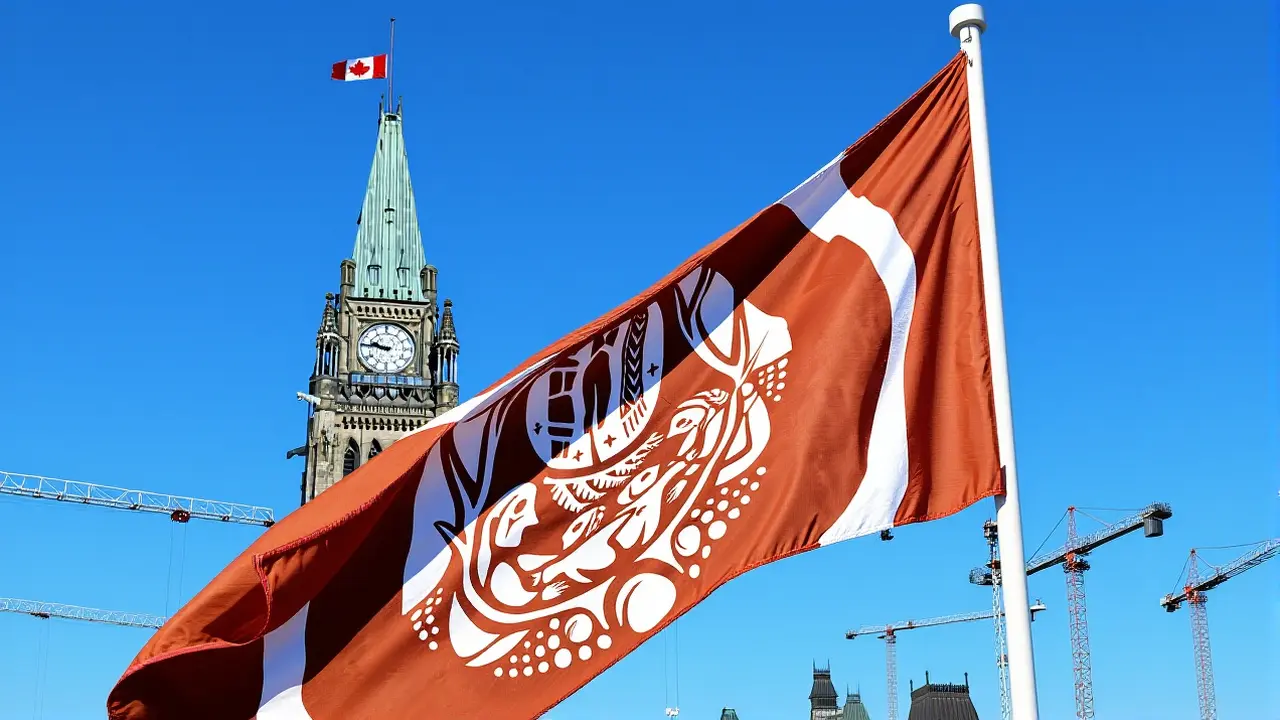
The fifth National Day for Truth and Reconciliation will unfold across Canada on Tuesday, September 30, 2025, as communities gather to honor survivors of the residential school system and remember those who never came home. For the first time as Prime Minister, Mark Carney will speak at the National Commemorative Gathering on Parliament Hill in Ottawa, while Governor General Mary Simon — the first Indigenous person to hold the office — attends her fifth consecutive observance. Canadian Heritage has funded 340 events nationwide, from quiet ceremonies to large-scale cultural gatherings, underscoring a national commitment that’s growing deeper, not just wider.
A Decade After the Final Report
It’s been ten years since the Truth and Reconciliation Commission of Canada released its landmark report, detailing the systemic abuse, cultural erasure, and deaths of thousands of Indigenous children in federally funded residential schools. Action 80 of the 94 Calls to Action directly led to the creation of this day — a federal statutory holiday meant to force the country to pause, reflect, and act. But as The Honourable Murray Sinclair, former chair of the Commission and now Chancellor of Queen’s University, reminded the public: "Reconciliation is yours to achieve." It’s not a ceremony. It’s a daily responsibility.That’s why this year’s events go beyond symbolism. In Toronto, hundreds will gather at Nathan Phillips Square for art, storytelling, and a lesson in Indigenous agriculture led by Pamela Chrisjohn. At the University of Toronto, the film Sugarcane — which exposes the intergenerational trauma of residential schools — will screen with content warnings for abuse and genocide, followed by a discussion with academic Maddie Frechette and community advisor Chiara Marchesano. The screening isn’t entertainment; it’s evidence.
Art, Memory, and the Power of Place
In British Columbia, the day is lived through land and memory. At Sneq'wa e'lun (Blue Heron House) in Duncan, a physical tour of murals and audio trails invites participants to walk the same paths once walked by children forced into assimilation. Meanwhile, at the Cowichan Performing Arts Centre, the performance Nutsa'maat Sqwalawun: One Heart, One Mind, One Voice, One Heart weaves together song, dance, and testimony across generations. This isn’t theater. It’s truth-telling as ceremony.At the University of Toronto, multi-disciplinary artist Carey Newman (Hayalthkin’geme) will appear at a university-wide event, his carved wooden panels and films serving as bridges between pain and possibility. The University of Toronto Bookstore is selling Orange Shirt Day shirts — all proceeds going to Indigenous-led organizations. And in a quiet, powerful act, The Rev’d Paige Souter and Ramata Tarawally will lead a mindful walk through Victoria University’s Indigenous Healing Garden, where silence is as sacred as speech.
Who’s Still Being Left Behind?
Not everyone sees progress. NDP MP Lori Idlout, an Inuk woman and critic for Indigenous Affairs, has been blunt: "We’ve had ceremonies. We’ve had speeches. We haven’t had enough policy changes." She points to ongoing housing crises in First Nations communities, the lack of clean water in dozens of reserves, and the slow pace of implementing the TRC’s remaining Calls to Action. "Reconciliation isn’t a day. It’s a budget line. It’s a land return. It’s a child who can speak their language without fear."Carole Walsh, a Toronto resident whose mother was taken from her family near Sudbury at age five, spoke at Nathan Phillips Square last year: "She wasn’t allowed to speak her language. She wasn’t allowed to even sing. She was forced to speak English. She’d been sexually abused when she got into the residential school." Her words aren’t history. They’re the lived reality of thousands of families still waiting for justice.
What Comes After September 30?
The day doesn’t end when the last song fades. At Queen’s University, a dedicated working group has been meeting since January to plan year-round initiatives — from curriculum reforms to Indigenous language courses. The University of Toronto is embedding reconciliation into its institutional policies, not just its events. Canadian Heritage has signaled that funding for 2026 and beyond will remain intact — but only if communities continue to demand accountability.There’s a quiet truth here: the most powerful acts of reconciliation aren’t on Parliament Hill. They’re in classrooms where teachers choose to teach the unvarnished history. They’re in grocery stores that stock Indigenous-made products. They’re in the silence after someone shares a story they’ve never told before.
Mark Carney promised to "match remembrance with responsibility." The question isn’t whether he will. It’s whether the rest of us will.
Frequently Asked Questions
Why is this day called Orange Shirt Day?
Orange Shirt Day honors Phyllis Webstad, a Northern Secwépemc woman from British Columbia, who had her new orange shirt taken away on her first day at a residential school in 1973. The color symbolizes how Indigenous children’s identities were stripped from them. Today, wearing orange is a public act of solidarity — over 1.2 million Canadians wore orange shirts in 2024, according to the Orange Shirt Society.
What’s the difference between the National Day for Truth and Reconciliation and Orange Shirt Day?
Orange Shirt Day began in 2013 as a grassroots movement led by survivors and allies. The National Day for Truth and Reconciliation became a federal statutory holiday in 2021, following the TRC’s Calls to Action. While they’re observed on the same day, the federal holiday carries official recognition and funding, while Orange Shirt Day remains a cultural and community-driven observance.
How many children died in residential schools?
The Truth and Reconciliation Commission documented over 4,100 confirmed deaths, but experts believe the real number exceeds 6,000. Many records were destroyed or never kept. The Commission’s findings show that children died from disease, malnutrition, abuse, and neglect — often buried in unmarked graves. Recent ground-penetrating radar scans have uncovered more than 2,000 potential burial sites at former school locations.
What are the 94 Calls to Action?
The 94 Calls to Action are recommendations from the Truth and Reconciliation Commission to redress the legacy of residential schools. They cover areas like child welfare, education, language and culture, justice, health, and commemoration. As of 2025, only 12 have been fully implemented, according to the National Centre for Truth and Reconciliation. Action 80 — creating the National Day — was one of the few fully realized.
Why is Mark Carney’s presence significant this year?
Carney is the first Prime Minister since Justin Trudeau to attend the event as a sitting PM — and his first time speaking at it. His presence signals continuity, but also pressure: his government has faced criticism for delays on implementing TRC recommendations, particularly around child welfare funding and clean water. His speech will be scrutinized not just for its words, but for whether it aligns with new funding commitments.
How can non-Indigenous Canadians support reconciliation beyond September 30?
Start by listening — read the TRC report, support Indigenous-owned businesses, and donate to organizations like the National Centre for Truth and Reconciliation or local land-back initiatives. Advocate for curriculum changes in schools. Challenge stereotypes when you hear them. Reconciliation isn’t about guilt; it’s about responsibility. And responsibility means showing up — every day, not just one.

Sihle Tana
I am a journalist with a passion for covering daily news in Africa. My work has taken me across the continent, reporting on significant events and stories that impact communities. I strive to bring insightful and comprehensive news coverage to my readers.
Just wanted to say I’m really moved by the part about the healing garden in Victoria. Silence can be so powerful when it’s earned. I’ve been trying to listen more, not just speak. It’s a start.
Same. I watched Sugarcane last week. Didn’t cry. Didn’t even flinch. Just sat there wondering why it took me 42 years to finally watch it.
My mom used to wear orange shirts every year but never talked about why. I found her journal last year. She was a residential school kid’s cousin. She never told anyone.
im so glad we finally have this day but like… why do we only talk about it in september? why not in april? or june? just a thought lol
Let’s be honest: this is performative allyship dressed up as policy. We’re spending millions on ceremonies while children in Attawapiskat still drink lead-tainted water. This isn’t reconciliation-it’s a PR stunt with a holiday.
the thing is… reconciliation isn’t about the big speeches. it’s about the guy at the gas station who buys a coffee from the indigenous vendor instead of the chain. it’s about the teacher who says ‘Nishnaabemwin’ right. it’s about the grocery store that stocks bannock next to bagels. small things. daily things. that’s where the real work lives.
So… how many of these events are actually led by Indigenous people? Or are they just white people hosting panels about Indigenous pain? 🤔
Why do we keep giving money to organizations that don’t even know how to spell 'Anishinaabe'? This whole thing is a money pit.
One cannot help but observe that the institutionalization of grief, however well-intentioned, risks ossifying trauma into spectacle. The true measure of reconciliation lies not in the number of events funded, but in the dismantling of structural inequities-particularly in child welfare, land tenure, and linguistic sovereignty. One must ask: Are we commemorating, or are we merely consuming?
Let’s be real-this is just woke capitalism. Universities sell shirts, corporations post #OrangeShirtDay on LinkedIn, and nobody actually changes anything. It’s all branding. The TRC’s calls to action? 12 implemented. The rest? Dead letters. We’re performing, not progressing.
Carney’s speech better include funding for clean water. Or it’s just noise.
Did you know the orange shirt was actually a government propaganda tool to make people feel better? The whole day is a distraction from the real agenda: globalist land redistribution. Wake up.
Canada doesn’t need a holiday. It needs a damn border wall. Why are we spending money on this when our own citizens are struggling? Get real.
Let’s not pretend this is about justice. It’s about guilt tourism. White liberals buy shirts, post on Instagram, then go back to their gated communities. The only thing being reconciled is their conscience. Not the truth.
My grandmother spoke Michif in secret. She taught me one word before she died: 'Kihci-manitow'. It means 'Great Spirit'. I say it every morning now. Not for the day. For her.